
“I want my hair back—but I don’t want everyone to know that I had a hair transplant.”
For many patients considering hair restoration, the fear is not only whether the transplanted hair will grow. They also worry about scars at the back of the head.
You may even have heard that modern FUE hair transplantation is completely “scarless.”
That description can be misleading.
Any procedure that removes hair follicles through the skin involves healing, and healing can leave some degree of scarring. The important difference is what type of scar develops, how noticeable it becomes and whether surrounding hair can conceal it.
This is particularly relevant for Indian patients. Published Indian hair-transplant literature notes that the small hypopigmented scars associated with FUE may be more noticeable in darker skin phototypes, particularly when the head is shaved very short or harvesting has been extensive.
Dr Deepam Shah, MD, DNB, FAM, is a Dermatologist, Cosmetologist and Hair Transplant Surgeon with more than a decade of experience. He has been associated with more than 2,500 hair transplant success stories and provides hair and aesthetic treatments at Viva Aesthetic Clinic, Mumbai.
Understanding scars before surgery can help you choose a technique—and hairstyle—that fits your expectations.
Every Hair Transplant Technique Can Leave a Scar
This is the first fact patients deserve to know.
Hair transplantation involves transferring follicles from a donor region, usually at the back and sides of the scalp, to areas affected by hair loss.
Removing those follicles creates small wounds in the donor area.
The body heals those wounds, and scar tissue can form as part of the normal healing process.
What differs between techniques is the pattern of scarring.
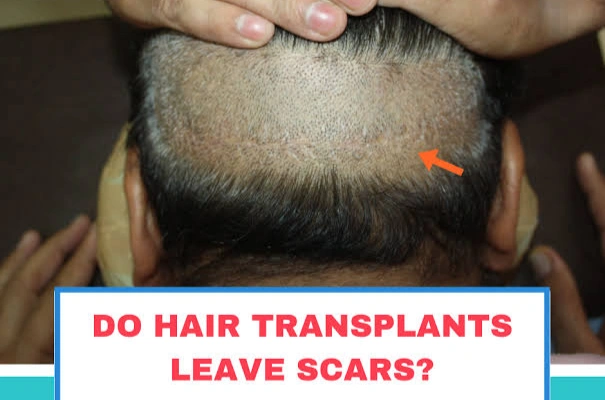
With FUT, follicles are obtained from a strip of donor scalp. Healing generally leaves a linear scar.
With FUE, individual follicular units are removed using small punches. Instead of one long line, this produces numerous tiny circular scars.
Research comparing the two techniques confirms this distinction: FUT produces a linear donor scar, whereas FUE produces punctate scars that are usually easier to conceal.
Therefore, “minimal scarring” is a more accurate description than “no scarring”
What Do FUE Scars Actually Look Like?
FUE scars do not normally resemble a surgical line.
Each follicular unit is individually extracted through a tiny opening.
After healing, these sites may appear as small pale or white dots scattered through the donor area.
When extraction is appropriately distributed and enough surrounding hair remains, the marks may be difficult to notice at ordinary hairstyle lengths.
But they can become more apparent when:
- The scalp is shaved extremely short
- A large number of grafts have been harvested
- Follicles were extracted too close together
- The donor area has become depleted
- There is a strong contrast between scars and surrounding skin
- Healing has been abnormal
This is why someone who wants to maintain a completely shaved hairstyle should discuss that preference before surgery.
Hair that hides tiny scars at one length may reveal them when clipped much shorter.
FUT Leaves a Different Type of Scar
FUT—Follicular Unit Transplantation—is sometimes called the strip method.
Instead of extracting follicles individually, a narrow strip of scalp containing donor follicles is surgically removed. The area is then closed.
This generally produces a linear scar across the donor region.
When healing is good and surrounding hair has adequate length, the line can often remain concealed.
However, scar width and appearance can vary.
Factors such as wound tension, individual healing characteristics and surgical technique can influence the final scar. Hair-transplant literature describes possible FUT scar patterns including widened, visible, hypertrophic and, rarely, keloid scars.
The choice between FUE and FUT therefore should not simply be:
“Which one has no scar?”
Neither technique can honestly promise that.
A more useful discussion is about which type of donor scar is more acceptable for your scalp, donor supply and preferred hairstyle.
Overharvesting Can Be More Noticeable Than the Individual Scars
Imagine removing a few plants evenly from a dense garden.
The gaps may barely be visible.
Now imagine removing too many plants from one small section.
The entire area begins to look empty.
A similar principle applies to the donor area during FUE.
The donor supply is finite.
Removing too many follicles or extracting them unevenly can produce a depleted or “moth-eaten” appearance at the back of the scalp. Published literature identifies donor depletion and overharvesting as recognised complications of FUE.
This problem cannot be solved simply by making the punch smaller.
Long-term planning matters.
This becomes especially important for younger patients whose hair loss may continue over many years. They may need their remaining donor follicles for future restoration.
A responsible transplant plan therefore considers not only how many grafts can be removed today but also how much donor hair should be preserved for tomorrow.
Your Skin’s Healing Pattern Also Matters
Another increasingly relevant question is how the weight was lost.
GLP-1-based weight-management medications can produce substantial weight reduction in some patients.
Hair thinning has been rep
Two patients can undergo similar procedures and heal differently.
Some people naturally produce more prominent scars.
Previous scars can provide useful information about how your skin tends to heal.
Tell your doctor if you have previously developed:
- Thick raised scars
- Keloids
- Hypertrophic scars
- Delayed wound healing
- Significant pigmentation after injuries
- Previous surgical wound problems
Keloid and hypertrophic scar formation following hair transplantation is considered uncommon, but it is possible.
This makes your medical and scar history relevant during consultation.
Do not assume that because a friend’s donor area became almost unnoticeable, yours will heal identically.
orted among people using these medications. Dermatologists believe that rapid weight reduction and reduced intake of protein or other nutrients may contribute to telogen effluvium in some patients, although research is continuing into whether the medications themselves may also play a role.
If your shedding began after starting a prescription weight-management medication, tell both the doctor managing your weight and your dermatologist.
Do not independently discontinue a prescribed medication because you notice hair fall.
The more useful step is to establish:
- What type of hair loss is occurring?
- How quickly has weight been lost?
- Has food intake changed substantially?
- Is nutrition adequate?
- Could another medical condition be contributing?
This allows the problem to be approached without automatically blaming one medication.
Your Haircut After Transplantation Deserves Some Planning
Patients usually spend a lot of time discussing their new hairline.
Far fewer discuss the haircut they want at the back.
Yet this can directly influence how visible donor scars become.
If you normally maintain medium-length hair, small FUE extraction marks may be easily concealed by surrounding hair.
If you prefer a very short buzz cut or regularly shave your scalp, the situation can be different.
Similarly, an FUT linear scar may become visible if the surrounding hair is cut too short.
Tell your surgeon about your normal hairstyle before choosing the donor technique.
Even better, explain what hairstyle you would like to maintain five or ten years from now.
A technically successful transplant should work with your lifestyle rather than forcing you to maintain a hairstyle solely to hide the donor area.
What Can Be Done About an Existing Hair Transplant Scar?
Perhaps your transplant happened several years ago and the scar is already bothering you.
You still have options.
The appropriate approach depends on whether the concern is a linear FUT scar, widespread FUE dots, donor depletion, abnormal scar tissue or pigmentation difference.
Possible approaches in selected patients can include:
Scar revision: A widened surgical scar may sometimes be surgically revised.
Hair transplantation into a scar: Carefully selected follicles may sometimes be transplanted into scar tissue to improve camouflage.
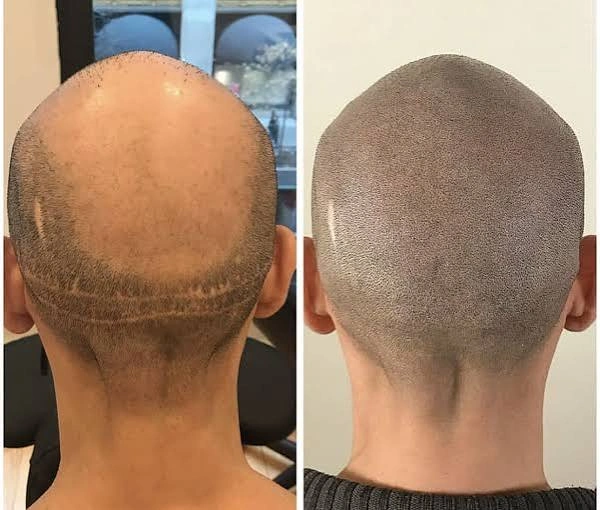
Scalp micropigmentation: Pigment can be used to reduce the visual contrast between certain scars and surrounding scalp.
Hairstyle modification: Sometimes changing hair length provides surprisingly effective camouflage without another procedure.
Published hair-transplant literature describes both transplantation into scars and scalp micropigmentation among options used for visible donor scars.
However, not every scar can be treated in the same way.
Scar thickness, blood supply, available donor hair and the cause of the original problem should be evaluated first.
Scar Prevention Begins Before the First Graft Is Removed
Patients naturally think about scar creams and postoperative products.
But one of the most important opportunities to minimise visible scarring occurs before surgery starts.
The donor area needs to be planned appropriately.
This means considering:
- Available donor density
- Number of grafts genuinely required
- Safe extraction distribution
- Existing hair loss
- Future progression
- Previous procedures
- Scalp characteristics
- Patient’s healing history
- Preferred future hairstyle
Modern reviews of FUE complications emphasise careful patient selection, surgical technique and postoperative care as important measures for reducing complications.
Dr Deepam Shah completed his MBBS from the University of Bombay and DNB in Dermatology & Venereology from the University of Delhi. He also holds Fellowship training in Aesthetic Medicine, Hair Transplant, Dermatology and Cosmetology.
As a Hair Transplant Surgeon at Viva Aesthetic Clinic, Mumbai, Dr Deepam Shah evaluates both the balding area and the available donor region when planning hair restoration.
For patients, donor planning matters because the back of the scalp should not become the forgotten part of a procedure designed to improve the front.
A hair transplant can redistribute hair, but it cannot make the skin behave as though surgery never happened.
FUE usually leaves multiple tiny dot-like donor scars, while FUT generally produces a linear scar. The visibility of those scars depends on the technique, number and distribution of harvested grafts, skin healing and the hairstyle you choose afterwards.
For patients, this does not mean hair transplantation should be feared. It means the word “scarless” should not be the reason you choose a procedure.
Dr Deepam Shah, MD, DNB, FAM, is a Dermatologist, Cosmetologist and Hair Transplant Surgeon with more than a decade of experience. At Viva Aesthetic Clinic, Mumbai, patients considering hair transplantation can have both their recipient and donor areas assessed before surgical planning.
Frequently Asked Questions
Is FUE hair transplant completely scarless?
No. FUE avoids the long linear scar associated with FUT, but each extracted follicular unit can leave a tiny circular scar. These marks are often difficult to notice when appropriately distributed and covered by surrounding hair.
Can I shave my head after an FUE transplant?
You can choose short hairstyles after healing, but shaving extremely close may make small hypopigmented extraction marks more noticeable. Discuss your preferred hair length with your surgeon before the procedure.
Which leaves a bigger scar: FUE or FUT?
They create different scar patterns rather than simply “bigger” and “smaller” scars. FUT generally leaves one linear donor scar, while FUE leaves multiple tiny punctate scars.
Why does my donor area look patchy after FUE?
Patchiness can occur if too many follicles have been removed or harvesting has been uneven. Overharvesting is a recognised FUE complication and can create a depleted or moth-eaten appearance.
Can hair grow directly through an old transplant scar?
Hair follicles do not spontaneously regenerate within established scar tissue. However, transplantation into selected scars may sometimes be considered after assessing scar quality and blood supply.
Can scalp micropigmentation hide hair transplant scars?
Scalp micropigmentation can be used in selected patients to camouflage the colour contrast of a donor scar. It does not remove the scar itself; it aims to make it less visually obvious.
Can I undergo another hair transplant if I already have scars?
Possibly. The surgeon needs to examine your remaining donor density, previous extraction pattern, scar condition and future hair-loss requirements. A previous transplant does not automatically prevent another procedure, but the remaining donor supply becomes especially important.