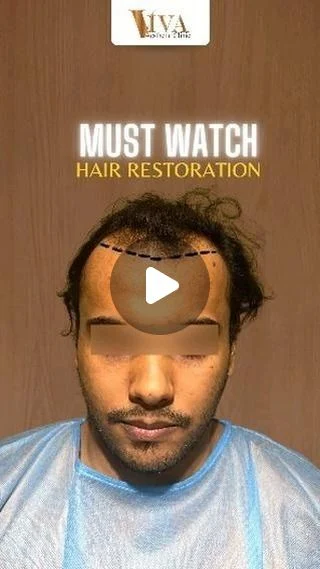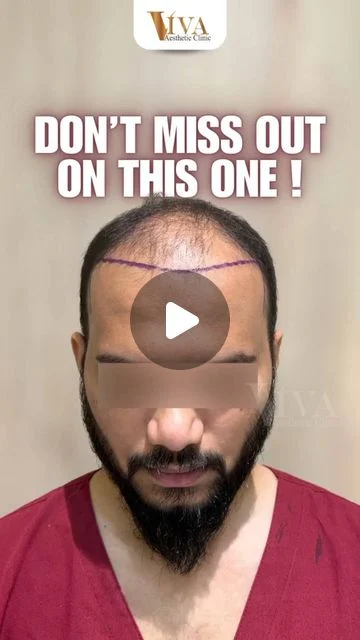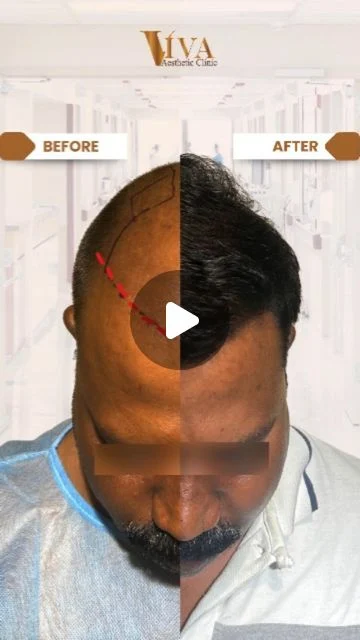
Are you curious about the latest advancements in hair transplant? Look no further than Follicular Unit Extraction / FUE Hair Transplant in Mumbai. Follicular Unit Extraction (FUE) has revolutionized the field of hair restoration, offering patients in Mumbai a minimally invasive and natural-looking solution to hair loss. Led by Dr. Deepam Shah’s expertise, the Viva Aesthetic Clinic team is at Mumbai, the forefront of this cutting-edge technology, helping individuals regain their confidence and embrace a fuller, more youthful appearance.
What is FUE( Follicular Unit Transplantation), and How Does it Work?
FUE is a type of hair transplant that involves extracting individual hair follicles from the donor site, typically the back of the head, and transplanting them to the recipient site, or the area where you want more hair. Using a tiny punch tool, the surgeon carefully extracts each follicle, leaving behind small, circular scars that are virtually undetectable.
The FUE Hair Transplant Procedure:
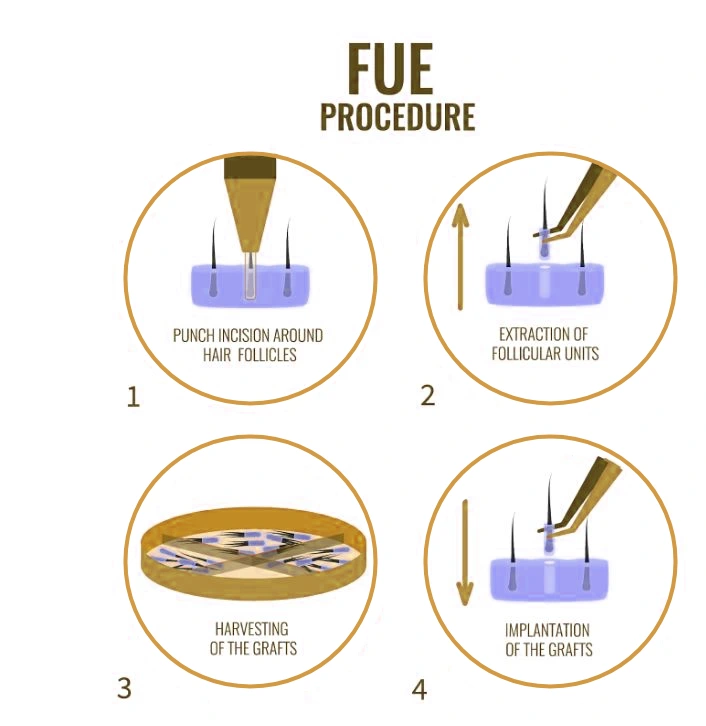
The FUE hair transplant procedure involves the careful extraction and transplantation of individual hair follicles. It is a meticulous process that requires specialized tools and extensive expertise from the surgeon. Here’s a step-by-step breakdown of the FUE procedure:
– Preparation: The patient’s scalp is trimmed to a short length (1-2 mm) in the donor area, typically the back and sides of the head.
– Follicle Extraction: Using a specialized punch tool, the surgeon carefully extracts individual hair follicles from the donor area. The punch tool is typically 0.8-1.0 mm in diameter, allowing for precise extraction with minimal trauma to the surrounding tissue.
– Recipient Site Preparation: The surgeon creates small recipient sites in the balding or thinning areas using a specialized blade or needle.
Graft Implantation: Using specialized implantation tools, the surgeon carefully places the extracted follicular units into the prepared recipient sites.
– Post-Operative Care: The patient is provided with detailed instructions for post-operative care, including the use of medications, gentle hair-washing techniques, and activity restrictions.
The FUE hair transplant procedure is a delicate and intricate process that requires extensive training and experience from the surgeon. By utilizing specialized tools and techniques, the team at Viva Aesthetic Clinic can deliver natural-looking and long-lasting results for their patients in Mumbai.
Difference between FUE and FUT hair transplant methods:
Understanding the difference between FUE Hair Transplant and Micro FUE hair transplant helps patients choose the most suitable technique for natural and long-lasting results. While both methods are based on the same follicular unit extraction process, Micro FUE is considered a more refined version that uses smaller instruments for improved precision and faster healing. Learn more about FUE Hair Transplant to understand how the standard technique works and why it is one of the most widely used hair restoration procedures. The comparison table below explains the key differences between FUE and Micro FUE in terms of technique, healing time, and results.
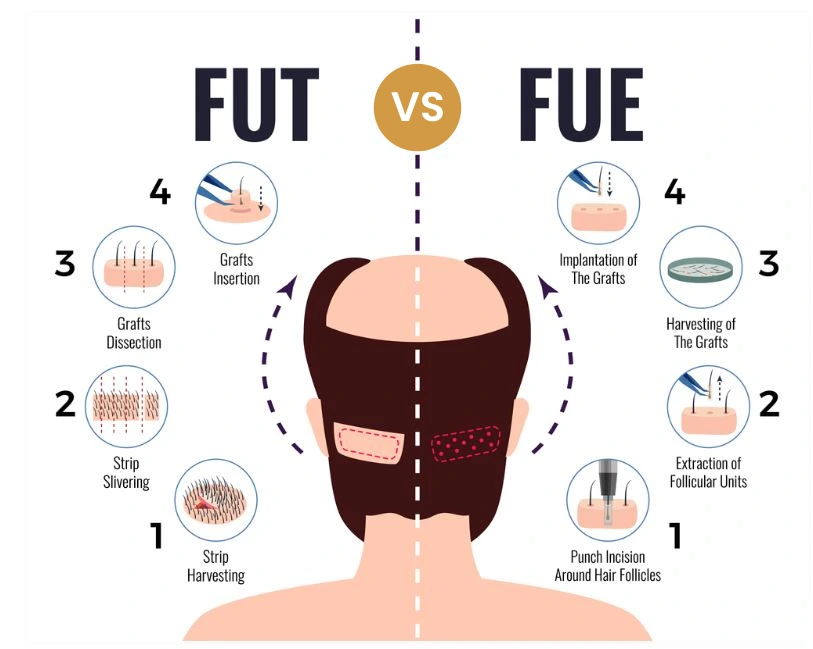
The key differences between FUE (Follicular Unit Extraction) and FUT (Follicular Unit Transplantation) hair transplant methods are:
1) Extraction Technique:
– FUE involves extracting individual hair follicles from the donor area using a specialized punch tool.
– FUT involves removing a strip of skin containing hair follicles from the donor area.
2) Scarring:
– FUE leaves small, circular scars at the extraction sites, which are less noticeable, especially for those who wear their hair short.
– FUT leaves a linear scar where the strip of skin was removed, which may be more visible for those with shorter hairstyles.
3) Procedure Time and Graft Yield:
– FUE is a more time-consuming procedure, but it can be better suited for patients with limited donor hair density.
– FUT is generally faster to perform and can yield a higher number of grafts, making it suitable for patients who require more extensive coverage.
4) Recovery Time:
– FUE typically has a shorter recovery time compared to FUT, with patients often able to resume normal activities within 2-3 weeks.
– FUT has a longer recovery time, with patients usually needing 10-12 days to recover.
The Benefits of FUE
FUE Hair Transplant in Mumbai offers several advantages over traditional hair transplant methods, such as strip harvesting. Here are just a few:
– Minimally invasive: FUE is a less invasive procedure than strip harvesting, resulting in faster healing times and reduced discomfort.
– Natural-looking results: The individual extraction and transplantation of follicles allow for a more natural-looking hairline and greater control over the direction and angle of hair growth.
– No linear scar: Unlike strip harvesting, FUE does not leave a linear scar, making it an excellent option for those who prefer short hairstyles or want to wear their hair up.
– Shorter recovery time: FUE typically has a shorter recovery time than strip harvesting, allowing you to return to your normal activities sooner.
Is FUE Right for You?
FUE is a versatile procedure that can be used to treat various forms of hair loss, including male pattern baldness, female pattern baldness, and alopecia areata.
However, FUE may not be the best option for everyone. Factors such as the extent of hair loss, the quality of donor hair, and your overall health will influence the suitability of FUE for your specific needs.
At Viva Aesthetic Clinic, our experienced team led by Dr. Deepam Shah will guide you through the process, helping you determine if FUE is the right choice for you.
Factors to Consider for FUE Hair Transplant Cost in Mumbai
The cost of hair transplant surgery in Mumbai is influenced by several factors that contribute to the overall expense. Here’s a breakdown of the key elements:
1. Number of Hair Grafts Needed
The total cost largely depends on the number of grafts required to achieve the desired coverage. Each graft typically contains 2-4 hair strands. Patients needing a higher number of grafts to cover extensive bald areas will incur a higher cost for the procedure.
2. Extent of Baldness
Baldness is categorized into levels ranging from 1 (mild) to 7 (severe). The more advanced the baldness, the greater the number of grafts and the higher the associated costs.
3. Hair Transplant Technique
The method used for the hair transplant plays a significant role in determining the price.
Follicular Unit Transplantation (FUT): A traditional technique that is more affordable.
Follicular Unit Extraction (FUE): A more advanced and less invasive technique, but generally more expensive.
Advanced Surgical Hair Restoration: Costlier than non-surgical options due to its precision and long-lasting results.
The choice of technique depends on the patient’s level of baldness and their desired outcome.
4. Donor Site
Hair follicles are usually harvested from the back or sides of the scalp. However, in cases of severe baldness where the donor area lacks sufficient healthy follicles, hair may be extracted from other body areas such as the beard or chest (Body Hair Transplant). Extracting grafts from these areas is more complex, requiring greater precision, which increases the overall cost.
5. Additional Treatments
For enhanced results, many patients opt for supplementary therapies such as:
– Platelet-Rich Plasma (PRP) Therapy
– GFC (Growth Factor Concentrate) Treatment
– Hair Mesotherapy
These treatments, often performed after the transplant, can significantly add to the total cost.
6. Surgeon’s Qualifications and Experience
The expertise and reputation of the surgeon are crucial factors. A skilled plastic surgeon with extensive experience in hair restoration procedures will charge higher fees. While this increases the cost, it ensures better outcomes and minimizes risks.
7. Clinic Location and Infrastructure
The clinic’s location and facilities also influence the cost of hair transplant surgery. Factors such as:
The clinic’s reputation and infrastructure
- City-specific variations in taxes and living standards
- Surgeons’ fees in metropolitan areas like Mumbai
- All these can contribute to the variation in costs across different locations.
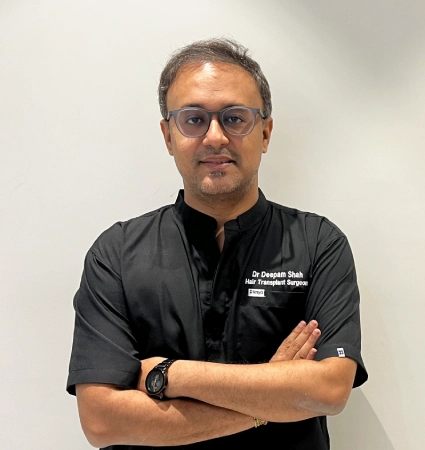
Dr. Deepam Shah: Renowned Dermatologist, Cosmetologist, and Hair Transplant Surgeon
Dr. Deepam Shah is a highly accomplished and respected dermatologist, cosmetologist, and hair transplant surgeon practicing in Mumbai, India. With over a decade of experience, he has established himself as one of the leading experts in his field.
Extensive Education and Training
After completing his MBBS degree, Dr. Deepam Shah went on to earn his MD and DNB in Dermatology and Venereology from prestigious institutions. He further expanded his expertise by completing a Fellowship in Aesthetic Medicine, Hair Transplant, Dermatology, and Cosmetology (FAM) from the Institute of Laser & Aesthetic Medicine (ILAMED).
Founder of Viva Aesthetic Clinic
Dr. Deepam Shah is the founder of Viva Aesthetic Clinic, a state-of-the-art facility located in the heart of South Mumbai. The clinic is equipped with the latest technology and advanced lasers, allowing Dr. Shah and his team to deliver exceptional results in skin, hair, and aesthetic treatments.

Patient Testimonials: Transforming Lives
The transformative power of FUE hair transplant in Mumbai is evident in the testimonials of Viva Aesthetic Clinic’s satisfied patients.
Check the impressive results that Dr Deepam Shah changed client’s overall look with FUE Technique that resulted in High-Density. This brings a whole package of confidence and a new look. Let’s transform your hair journey together!
YouTube Patient Testimonials
Pre-Procedure FAQs (Before FUE Hair Transplant)
1. How should I prepare before my FUE hair transplant in Mumbai?
Before your FUE procedure, you may be advised to avoid smoking, alcohol, and certain medications for a few days. It is also recommended to wash your hair properly and get good sleep before the procedure to help in smoother recovery.
2. Should I cut or shave my hair before an FUE transplant?
In most cases, the donor area is trimmed on the day of the procedure. Your doctor will guide you on whether partial or full shaving is needed based on your hair length and treatment plan.
3. How many grafts will I need for my hair transplant?
The number of grafts depends on your level of hair loss, hair density, and desired coverage. During consultation, the doctor will estimate the graft requirement after examining your scalp.
4. How long does an FUE hair transplant procedure take?
Most FUE sessions take around 6–8 hours depending on the number of grafts. Large sessions may take longer and sometimes may be divided into two sessions.
5. Can I travel home the same day after FUE transplant?
Yes, most patients can go home the same day. However, if you are traveling from outside Mumbai, it is usually recommended to stay at least 1–2 days for follow-up and washing guidance.
6. What should I avoid before the FUE procedure?
Usually patients are advised to avoid:
• Alcohol for 3–5 days
• Smoking
• Blood-thinning medicines (if doctor advises)
• Heavy exercise before surgery
This helps reduce bleeding and improves graft survival.
7. Will I be able to return to work quickly?
Many patients return to office work within 3–7 days depending on healing and comfort level. Visible redness and scabs usually settle within 1–2 weeks.
Post-Procedure FAQs (After FUE Hair Transplant)
1. When can I wash my hair after FUE transplant?
Gentle hair washing is usually allowed after 2–3 days using special instructions from the clinic. Avoid rubbing or strong water pressure during the initial days.
2. Is swelling normal after FUE hair transplant?
Yes, mild swelling or redness is common during the first few days and usually settles within a week. Sleeping with your head elevated can help reduce swelling.
3. Why is my transplanted hair falling out after a few weeks?
This is called shock loss, and it is a normal phase. Transplanted hairs may fall out within 2–4 weeks, but the roots remain and new hair starts growing after a few months.
4. When can I wear a cap or helmet after FUE transplant?
Loose caps may be allowed after about 7–10 days depending on healing. Helmets should usually be avoided for at least 2–3 weeks unless advised by your doctor.
5. When can I start gym or exercise after FUE?
Light activities can usually start after 7–10 days, but heavy workouts and sweating should be avoided for at least 3–4 weeks to protect grafts.
6. When will I start seeing hair growth?
New hair growth usually starts after 3–4 months and full results are seen around 9–12 months.
7. Is itching normal after FUE transplant?
Yes, mild itching is common during healing. Avoid scratching because it may damage grafts.
8. When can I cut or style my hair after FUE?
Hair trimming is usually allowed after about 3–4 weeks. Chemical treatments should be delayed until the scalp fully heals.
9.What happens if I accidentally touch the grafts?
Gentle touching usually does not damage grafts after a few days, but scratching or rubbing should be avoided during early healing.
Ready to Embrace Your New Look?
If you’re ready to take the first step towards a fuller, more confident you, look no further than FUE Hair Transplant in Mumbai At Viva Aesthetic Clinic. Our state-of-the-art technology and expert team of professionals are dedicated to helping you achieve the best possible results.
Schedule a consultation today and discover the magic of FUE! Call now on +(91) 93245 89084 | 022 3573 1556.