
“You look tired. Did you sleep well?”
It can be frustrating to hear this when you have actually had a full night’s sleep. For some people, the tired appearance is not caused by lack of rest but by hollowness or shadowing beneath the eyes.
Under-eye concerns are common among Indian patients because genetics, facial structure, pigmentation, lifestyle and natural ageing can all influence how this delicate area looks. Studies involving Indian populations have also identified periorbital dark circles as a frequently reported cosmetic concern, particularly among younger adults and women.
But an important point is often missed: not every dark circle needs a dermal filler.
Under-eye dermal fillers are primarily used to address selected cases of volume loss or tear-trough hollowness. They do not simply “erase dark circles.” Understanding what is actually creating the shadow under your eyes is therefore essential before treatment.
Dr Deepam Shah, MD, DNB, FAM, is a Skin Specialist in Mumbai, Dermatologist and Cosmetologist with more than a decade of experience in skin and aesthetic treatments. At Viva Aesthetic Clinic, Mumbai, the under-eye area is assessed carefully before deciding whether dermal filler or another approach is appropriate.
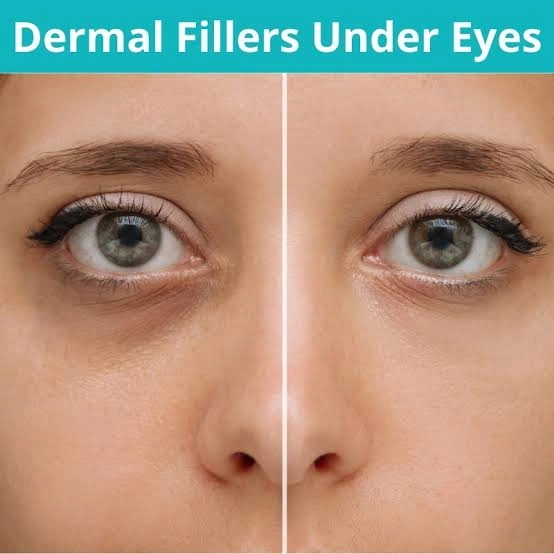
Find Out What Is Creating the Tired Look First
Dark-looking under-eyes can have several causes.
One of them is the tear trough—the natural groove extending from the inner corner of the eye towards the cheek.
Some people naturally have a deeper tear trough because of their facial structure. In others, it becomes more noticeable with age as the tissues supporting the under-eye and upper cheek change.
This depression can create a shadow, making the area appear darker even when the skin itself is not heavily pigmented.
But under-eye darkness can also result from:
- Increased pigmentation
- Thin under-eye skin
- Visible blood vessels
- Genetics
- Sun exposure
- Allergies or frequent eye rubbing
- Skin laxity
- Puffiness or under-eye bags
Several factors may exist at the same time.
A filler can improve volume-related hollowness, but it cannot directly correct every one of these problems.
What Does an Under-Eye Filler Actually Do?
Dermal filler is used to add carefully controlled volume to selected areas beneath the skin.
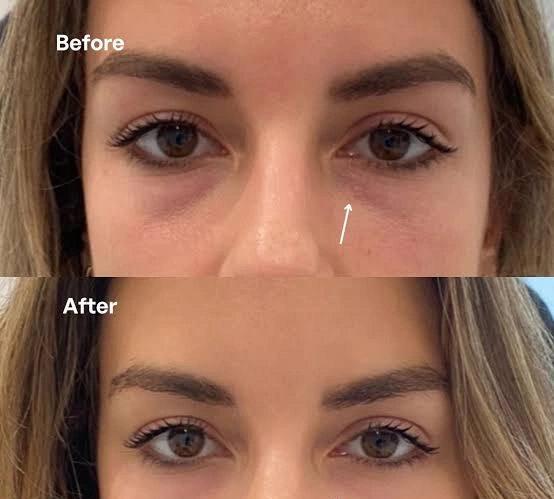
For suitable patients with tear-trough hollowness, filler may be placed strategically to reduce the visible depression between the lower eyelid and upper cheek.
By improving this transition, the shadow created by the hollow may become less prominent.
This can make the under-eye area appear:
- Less sunken
- Smoother
- Better supported
- More rested
The goal is not to create noticeable fullness under the eyes.
The under-eye area has limited space, and even small changes can influence appearance. Treatment therefore needs to be conservative and individually planned.
Adding more filler does not automatically produce a better result.
Why Under-Eye Fillers Need Extra Care
The skin beneath the eyes is among the thinnest and most delicate skin on the face.
This makes under-eye filler different from adding volume to areas such as the cheeks.
Several important anatomical structures are located around the eye, including blood vessels.
Incorrect placement, unsuitable filler selection or excessive product can contribute to unwanted effects.
Possible complications can range from temporary swelling and bruising to lumps, contour irregularities or persistent puffiness. Rare but serious vascular complications can also occur with injectable fillers.
For patients, this means the under-eye area should never be treated casually simply because the procedure itself appears quick.
Understanding the anatomy is a critical part of treatment planning.
Who May Be a Good Candidate?
Under-eye filler tends to be more appropriate when true volume loss or tear-trough depression is contributing significantly to the tired appearance.
The dermatologist may examine:
- Depth of the tear trough
- Lower-eyelid contour
- Upper-cheek support
- Skin thickness
- Existing puffiness
- Pigmentation
- Facial proportions
- Previous filler treatments
Patients with prominent under-eye bags, significant skin laxity or certain types of pigmentation may not obtain the result they expect from filler alone.
In some situations, adding volume could even make puffiness appear more noticeable.
This is why suitability matters more than simply wanting the procedure.
A patient who is not a good candidate for under-eye filler may benefit more from another dermatological or aesthetic approach.
What Happens During the Appointment?
Treatment begins with examination rather than injection.
The under-eye region is usually assessed from different angles and under appropriate lighting. The relationship between the lower eyelid, tear trough and cheek is considered.
Your previous cosmetic treatment history should also be discussed.
If you have had fillers in the past—even several months or years ago—tell your dermatologist.
Once a treatment plan has been decided, the area is cleaned and filler is carefully administered using an appropriate technique.
A needle or cannula may be used depending on the individual treatment plan and clinician’s assessment.
The amount required varies between patients.
Because the under-eye area is delicate, a conservative approach may sometimes be preferable to trying to achieve the entire correction through excessive volume in one sitting.
What Should You Expect Afterwards?
Some changes can be visible relatively quickly because dermal filler physically adds volume.
However, the appearance immediately after treatment should not necessarily be considered the final result.
Temporary swelling can influence how the area looks.
Patients may experience:
- Mild redness
- Tenderness
- Swelling
- Bruising
The under-eye region can be particularly prone to visible swelling because of its anatomy.
Your dermatologist will provide specific aftercare instructions.
Avoid repeatedly pressing or massaging the area unless you have been specifically instructed to do so.
If you are planning treatment before a wedding, holiday, professional shoot or another important occasion, leave adequate time rather than scheduling the procedure immediately beforehand.
Know the Warning Signs After Treatment
Most patients understandably focus on bruising and swelling, but they should also know when to seek medical attention.
Dermal fillers can rarely cause serious complications if material enters or compresses a blood vessel.
Patients should therefore be given clear instructions about what symptoms require urgent review.
Unusual or increasing pain, significant changes in skin colour, worsening symptoms or any visual disturbance after filler treatment should not be ignored.
Contact the treating doctor promptly.
Visual symptoms following facial filler require urgent medical assessment.
This is one reason choosing an appropriately qualified medical professional and a clinic capable of managing complications matters.
Patient safety should extend beyond the moment the injection is administered.
Sometimes Treating the Under-Eye Means Not Using Filler
The most useful outcome of an under-eye consultation may occasionally be finding out that filler is not the treatment you need.
For example, if the darkness is primarily caused by pigmentation, filling the tear trough may have limited impact on the colour of the skin.
If prominent bags are creating the shadow, simply adding more volume may not solve the problem.
Likewise, thin skin, vascular visibility and skin laxity may require different approaches.
Dr Deepam Shah completed his MBBS from the University of Bombay and DNB in Dermatology & Venereology from the University of Delhi. He also holds a Fellowship in Aesthetic Medicine and has more than a decade of experience in dermatology and aesthetic procedures.
At Viva Aesthetic Clinic, Mumbai, Dr Deepam Shah evaluates the under-eye area as part of the surrounding facial anatomy rather than treating every dark circle in the same way.
For patients, this assessment helps answer the most important question first: is the problem actually caused by missing volume?
Under-eye dermal filler can be useful for selected patients whose tired appearance is primarily caused by tear-trough hollowness or volume loss. It should not, however, be viewed as a universal treatment for dark circles.
The under-eye region is anatomically delicate, and careful patient selection is particularly important. Skin pigmentation, bags, tissue laxity, cheek support and existing facial structure should all be evaluated before deciding whether additional volume will actually help.
Dr Deepam Shah, MD, DNB, FAM, is a Skin Specialist in Mumbai and Dermatologist with more than a decade of experience in skin and aesthetic treatments. At Viva Aesthetic Clinic, Mumbai, patients can have their under-eye concerns assessed before considering dermal fillers or alternative treatment options.
For patients bothered by a constantly tired under-eye appearance, the first step should therefore be finding the cause rather than immediately filling the hollow. Once the reason is clear, a treatment plan can be chosen that is better suited to the individual face.
Frequently Asked Questions
Will under-eye fillers remove my dark circles completely?
Not necessarily. Fillers mainly address hollowness and volume-related shadowing. Dark circles caused by pigmentation, visible blood vessels or other skin-related factors may remain and require a different treatment approach.
Are under-eye fillers painful?
Patients may experience brief discomfort, pressure or a pinching sensation during treatment. The experience varies depending on individual sensitivity and the technique used.
How long do under-eye fillers last?
The duration varies according to the filler used, individual metabolism, anatomy and other factors. Your dermatologist can explain the expected duration for the specific product recommended for you.
Can under-eye filler cause swelling?
Yes. Temporary swelling can occur following treatment. Some patients may experience more noticeable or prolonged puffiness depending on their anatomy and individual response.
Can I get under-eye filler just before a wedding?
It is preferable not to schedule a first treatment immediately before an important event because swelling or bruising can occur. Discuss your event date with your dermatologist so adequate recovery time can be planned.
Can an under-eye filler be removed?
Some commonly used hyaluronic-acid fillers may be dissolved using an appropriate enzyme when medically indicated. Whether this is possible depends on the exact filler product used, which is another reason patients should know what is being injected.
How do I know whether I need filler or another treatment?
A clinical assessment is the best way to determine this. Your dermatologist can identify whether your concern is mainly caused by hollowness, pigmentation, puffiness, skin quality or a combination of factors and recommend treatment accordingly.