
“My hair fall has increased, and I can see my scalp more clearly now. If I choose GFC treatment, will my hair actually grow back?”
For anyone spending time and money on a hair treatment, this is probably the most important question.
Hair loss is extremely common in India, and androgenetic alopecia—commonly known as male or female pattern hair loss—is one of the major reasons adults experience progressive thinning. With growing interest in non-surgical hair restoration, GFC (Growth Factor Concentrate) therapy has emerged as one treatment option for selected patients.
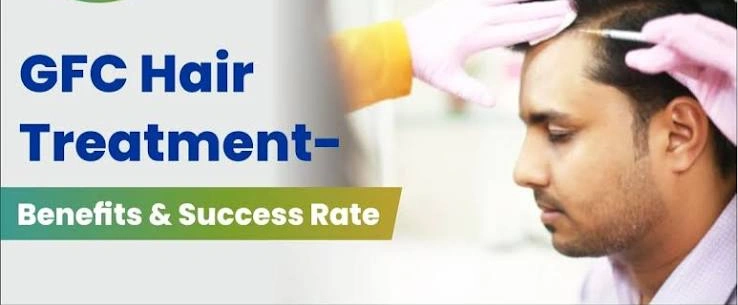
But when researching GFC, patients often come across claims such as “90% success” or “guaranteed regrowth.”
The scientific evidence is more nuanced.
Published studies have reported improvements in hair density, hair quality, hair-pull tests and patient satisfaction following GFC treatment. However, research is still developing, and there is no scientifically established single success-rate percentage that applies to every patient.
Your response depends heavily on why you are losing hair, how advanced the condition is and whether viable follicles are still present.
Dr Deepam Shah, MD, DNB, FAM, is a Dermatologist, Cosmetologist and Hair Transplant Surgeon with more than a decade of experience. At Viva Aesthetic Clinic, Mumbai, hair loss is evaluated before GFC treatment is considered so that patients can understand what degree of improvement may realistically be possible.
What Does “Success” Actually Mean in GFC Treatment?
This is where expectations need to be clear.
Success does not necessarily mean developing a completely new, thick head of hair.
For one patient, success may mean reduced daily shedding.
For another, it may mean improvement in existing hair thickness.
Someone with early thinning may be looking for better density, while a patient with advanced baldness may expect complete coverage—which may not be achievable with injectable treatment.
Clinical improvement can therefore be assessed using several measures, including:
- Reduction in excessive hair fall
- Improvement in hair density
- Increase in thickness of existing hair
- Better hair quality
- Changes seen on scalp photography
- Trichoscopic assessment
- Patient satisfaction
Before asking for a percentage, it is more useful to establish what result would count as successful for your particular condition.
What Does Research Say About GFC Results?
Available research is encouraging, but patients should understand its limitations.
A prospective study of five patients with androgenetic alopecia used three GFC sessions given four weeks apart. At 24 weeks, investigators reported improvement in hair growth in all five patients, improvements in hair density on trichoscopy, a negative hair-pull test in all patients four months after treatment and 80% patient satisfaction.
However, this was a very small study involving only five participants, so the findings should not be interpreted as proving that GFC has an 80% or 100% success rate for the general population.
More recent research has also compared growth-factor concentrates with other platelet-based approaches. Results indicate potential improvements in hair parameters, but responses vary between individuals.
Therefore, a responsible expectation is:
GFC may help selected patients with hair loss, but the outcome cannot be guaranteed before treatment.
The stage at which you seek treatment can influence what GFC can realistically achieve.
Imagine a hair follicle that has gradually started producing thinner and weaker strands.
That situation is different from an area where follicles have undergone advanced miniaturisation and there has been longstanding baldness.
GFC is generally aimed at supporting existing follicles through concentrated growth factors obtained from the patient’s own blood.
It cannot create completely new follicles where functional follicles are no longer present.
This means someone noticing early widening of the parting, reduced density or progressive thinning may have a different treatment potential from someone with a smooth bald area that has existed for many years.
In advanced cases, a hair transplant or another management strategy may need to be discussed.
Why Your Hair-Loss Diagnosis Can Change the Result
Hair loss is a symptom, not one single disease.
Before considering GFC, the reason for hair loss needs to be identified.
Possible causes include:
- Male pattern hair loss
- Female pattern hair loss
- Telogen effluvium
- Nutritional deficiencies
- Thyroid-related problems
- Significant physical or emotional stress
- Certain medications
- Scalp disorders
- Hormonal factors
- Autoimmune conditions
GFC may be considered particularly in selected patients with androgenetic alopecia, but it should not automatically be used for every form of hair shedding.
For example, if significant hair fall is related to an underlying deficiency, simply injecting growth factors into the scalp does not address that deficiency.
Correct diagnosis therefore has a direct influence on the likelihood of obtaining a useful result.
What Happens During a GFC Hair Session?
GFC is an autologous treatment, meaning the starting material comes from the patient’s own blood.
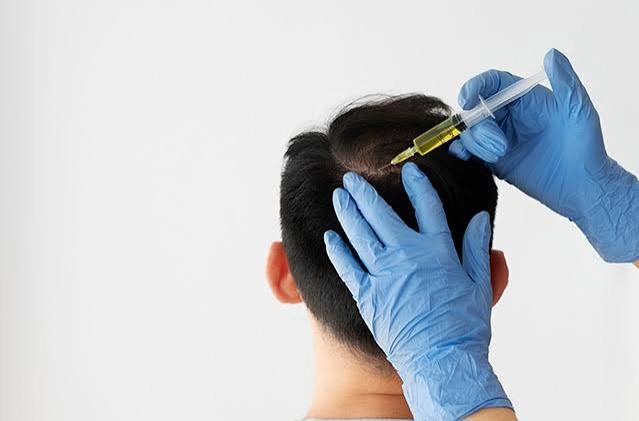
A blood sample is collected and processed using a specialised system designed to obtain a concentrate containing platelet-derived growth factors.
The prepared concentrate is then administered into selected thinning areas of the scalp.
Growth factors involved in these preparations may participate in biological processes related to follicular activity, tissue signalling and the local environment around existing hair follicles.
Treatment protocols can vary.
The number of sessions, interval between appointments and additional treatments recommended depend on the diagnosis and individual treatment plan.
Because injections are involved, temporary discomfort or tenderness can occur.
Patients should understand the complete proposed schedule before starting rather than judging the treatment after a single session.
How Soon Can You Judge Whether GFC Is Working?
Hair grows slowly.
That makes GFC very different from aesthetic treatments where a visible change may appear within days.
You should not expect to leave the clinic after the first session with visibly denser hair.
Changes need to be evaluated over time.
A dermatologist may use standardized photographs or trichoscopy to compare hair density and quality during follow-up.
Depending on the individual, reduced shedding may be one of the changes noticed before visible improvement in density.
Published GFC research has evaluated patients over periods extending several weeks to months, reinforcing the importance of allowing sufficient time before judging response.
Taking photographs under similar lighting, angle and hairstyle can also provide a more objective comparison than checking the mirror every morning.
Can GFC Work Better Alongside Other Hair Treatments?
GFC does not necessarily have to function as a stand-alone treatment.
For androgenetic alopecia, a dermatologist may recommend additional evidence-based medical management depending on the patient’s diagnosis, age, sex and medical suitability.
A 2026 randomized controlled study compared GFC and PRP when both were used alongside topical minoxidil. Both groups demonstrated improvement in the measured hair parameter, while the study did not establish GFC as having a universal superior success rate.
This highlights an important point for patients.
If your dermatologist recommends medic++ation or correction of an underlying factor alongside GFC, do not assume the additional treatment means GFC has failed.
Hair loss can involve several biological processes, and combination management may sometimes be more appropriate than relying on a single procedure.
Who Is More Likely to Be Satisfied With the Outcome?
The most satisfied patient is not necessarily the person who receives the greatest number of GFC sessions.
It is often the patient who begins treatment with the right diagnosis and realistic expectations.
Someone may be a more appropriate candidate when there are existing but thinning hairs that can potentially be supported.
Expectations need to be more cautious when baldness is advanced or the follicles in an area are no longer capable of producing useful hair.
This distinction can be assessed through scalp examination and, when appropriate, trichoscopy.
Dr Deepam Shah completed his MBBS from the University of Bombay and DNB in Dermatology & Venereology from the University of Delhi. He also holds a Fellowship in Aesthetic Medicine and Hair Transplant.
With more than a decade of experience in skin and hair treatments, he evaluates the pattern, severity and possible cause of hair loss before recommending a treatment.
At Viva Aesthetic Clinic, Mumbai, the purpose of consultation is therefore not to promise a particular success percentage. It is to determine whether GFC is likely to be a worthwhile option for the patient’s existing hair condition.
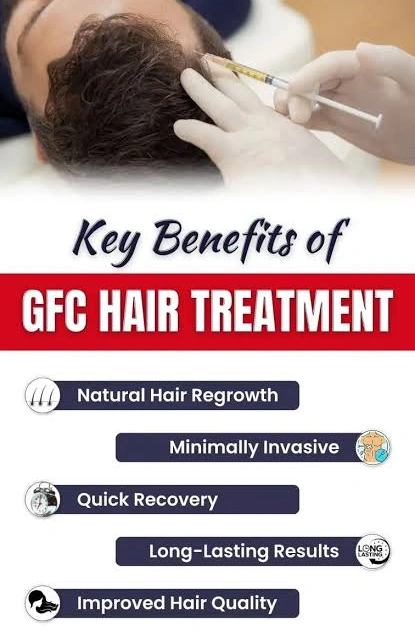
If you are researching the GFC hair treatment success rate, be cautious about choosing a clinic simply because it promises a very high percentage.
Current research supports the potential of growth-factor-based treatments to improve certain hair parameters in selected patients, but the available evidence does not justify guaranteeing the same result to everyone.
The cause of hair loss, degree of follicular miniaturisation, duration of thinning and presence of viable follicles all influence what can realistically be achieved.
Dr Deepam Shah, MD, DNB, FAM, is a Dermatologist, Cosmetologist and Hair Transplant Surgeon with more than a decade of experience. At Viva Aesthetic Clinic, Mumbai, patients can undergo assessment to understand their type and stage of hair loss before deciding whether GFC treatment is appropriate.
For a patient, a useful consultation should therefore provide something more valuable than an attractive success-rate number: a realistic idea of what improvement your own scalp and follicles are capable of achieving.
Frequently Asked Questions
What is the exact success rate of GFC hair treatment?
There is currently no reliable universal percentage that can be quoted for every patient. Small studies have reported encouraging improvements, but outcomes vary considerably according to diagnosis, hair-loss stage, follicle condition and treatment protocol.
Does GFC regrow completely lost hair?
GFC is intended to support existing hair follicles. It should not be expected to recreate follicles in longstanding completely bald areas where viable follicles are absent.
Is one GFC session enough?
GFC is commonly performed as a course rather than judged from one treatment. The appropriate number and spacing of sessions should be decided by the treating dermatologist according to the patient’s condition.
How will I know whether my treatment is working?
Progress may be assessed through changes in shedding, hair density, strand quality, clinical photographs and trichoscopic measurements. Objective comparisons are generally more useful than relying only on daily mirror observations.
Is GFC better than PRP for hair loss?
The evidence does not support a simple answer for every patient. Studies of platelet and growth-factor preparations have shown benefits, but results depend on preparation methods and patient characteristics. Your dermatologist can recommend an option based on your diagnosis.
Will the result last permanently?
Hair-loss conditions such as androgenetic alopecia are progressive. Even if improvement occurs, ongoing medical management or maintenance may be required depending on the individual condition.
What if I have advanced baldness?
GFC may have limited potential when an area has longstanding severe follicular loss. A dermatologist or hair transplant surgeon can assess whether medical management, injectable therapy, hair transplantation or another approach is more suitable.